From volcanic soil
to sea freight
Every consignment follows the same route from our Madang farms to your port. Here is what happens to the root along the way, and the specifications we ship against.
Six stages. The order matters — each one protects the quality established by the last.
Farming
Kava is farmed in the volcanic soils of Madang Province and grown to maturity before any harvest is considered.
Harvesting
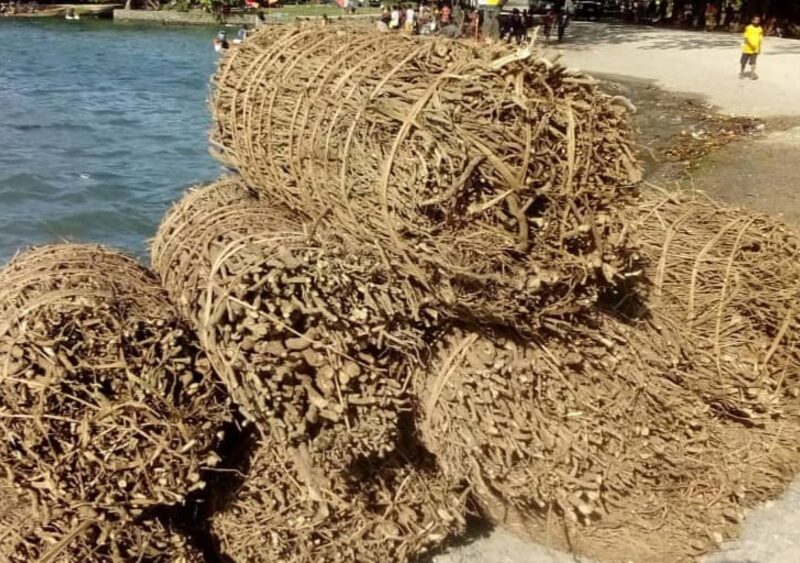
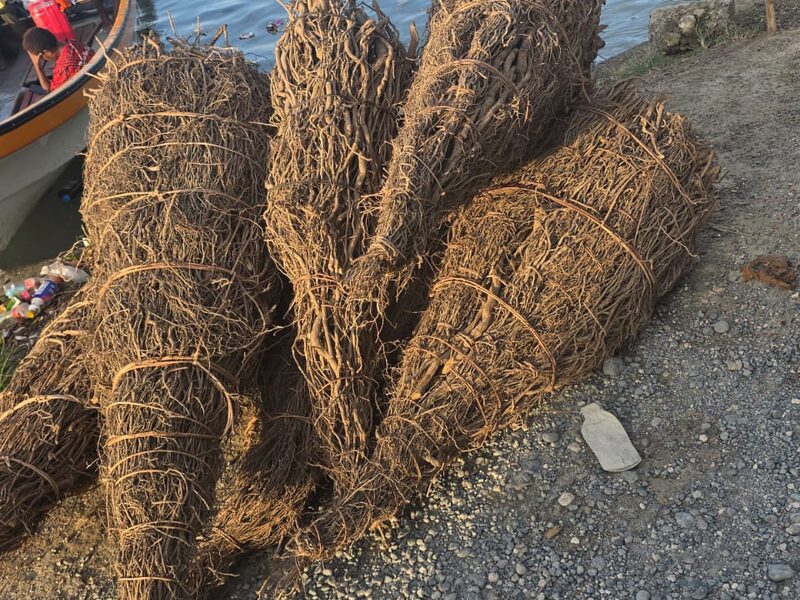
Roots are lifted by hand to keep the laterals intact, then separated into Waka and Lewena at the point of harvest.
Natural sun drying
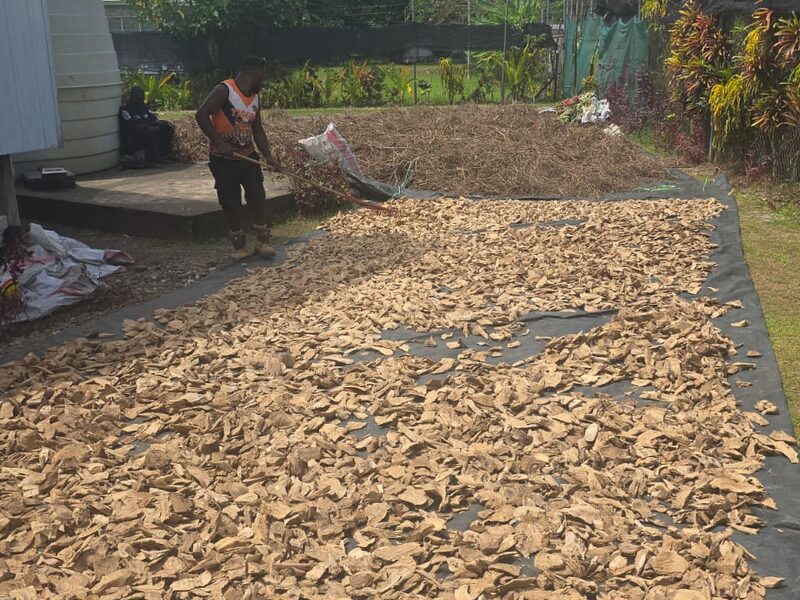
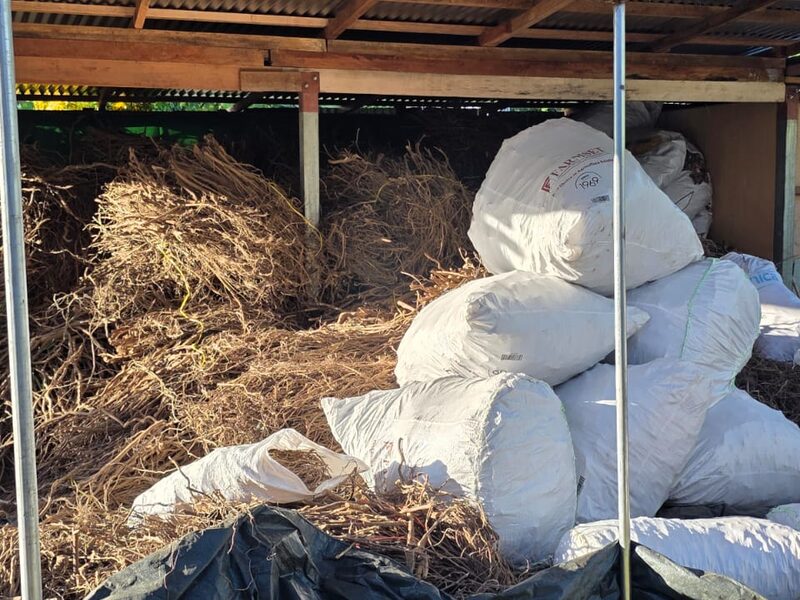
Sun-dried rather than kiln-forced. It takes longer, and it is what preserves colour, aroma and the integrity of the root.
Washing and cleaning
Every batch is thoroughly washed to remove soil and foreign matter before grading, so what leaves the farm is clean root and nothing else.
Grading and packing
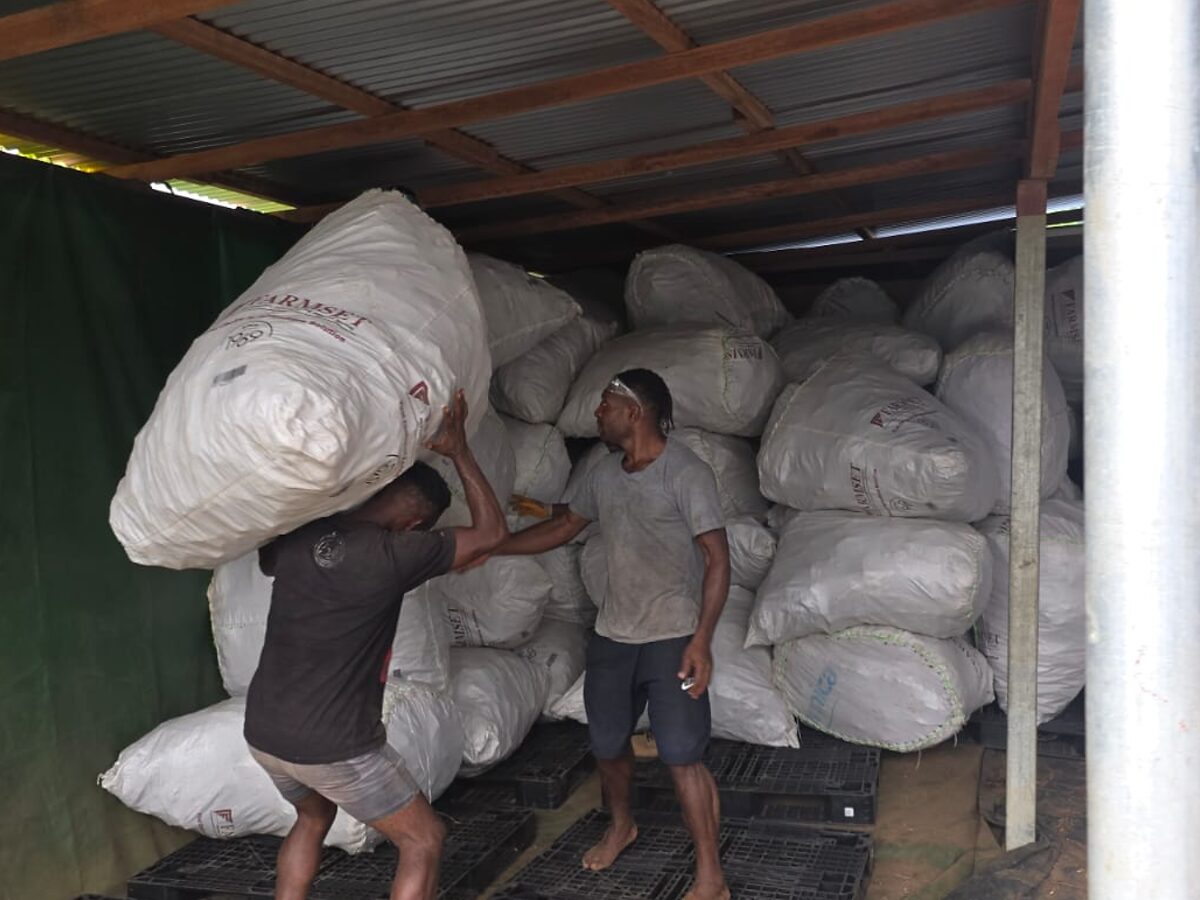
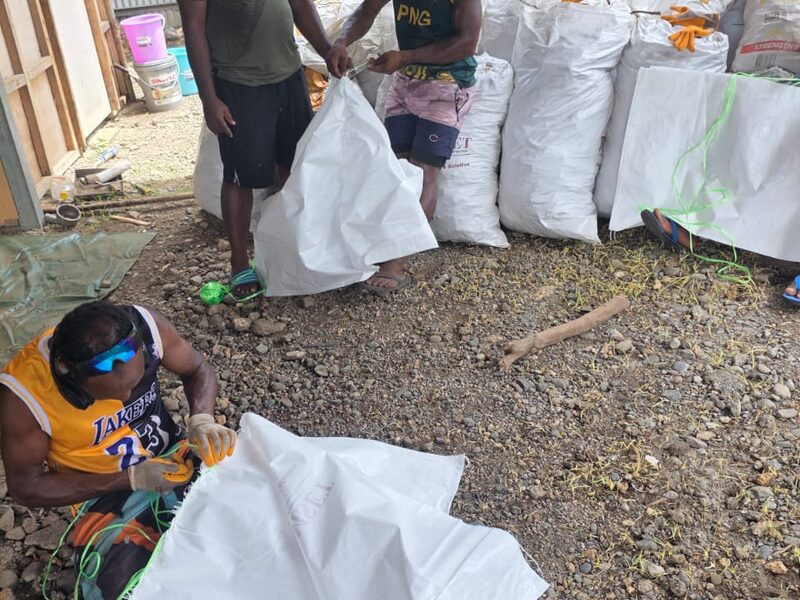
Graded root is packed into export bags to the buyer's specification, weighed and labelled for the destination market.
Containerising and shipping
Bags are gently stacked inside sea freight containers, meeting international export quality standards, and dispatched to your nominated port.
On the ground
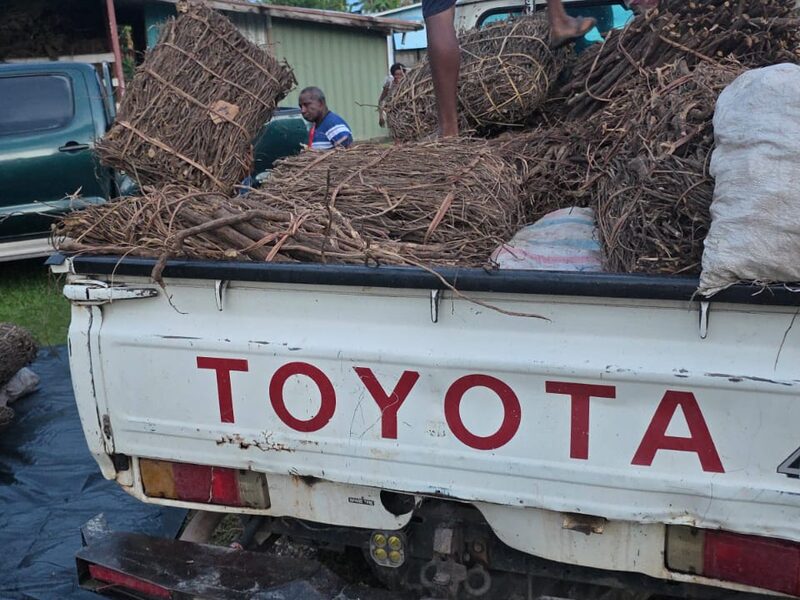
Collection, drying, bagging and transport — photographed during a working week in Madang.
Confirm final specifications with us for your destination market — requirements vary by country.
What we ship against
- Botanical name
- Piper methysticum
- Cultivar type
- Noble kava only
- Grades available
- Waka (laterals) · Lewena (laterals + stump)
- Form
- Dried root, whole or chipped
- Drying method
- Natural sun drying
- Origin
- Madang Province, Papua New Guinea
- Packing
- Export bags, stacked in sea freight containers
- Minimum order
- On application
- Lead time
- On application
Documentation that travels with the goods
Kava import rules differ sharply between markets, and a shipment is only as good as the paperwork behind it. Tell us your destination country early and we will confirm what is required before anything is packed.